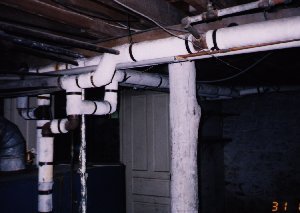
In its natural state, asbestos is commonly a white, brown, or blue fibrous mineral that has many practical applications, but is also a potent and deadly carcinogen. There are six different varieties of asbestos, but the three most common are:
- Chrysotile, also known as white asbestos, originates in Canada. It is from a “serpentine” rock, which means its fibers are curled and less sharp, pose fewer threats than other types of asbestos and is the type most often used industrially.
- Amosite, is called brown asbestos, is an “amphibole” from Africa. Amphibole rocks have long, jagged, needle like fibers that are considerably dangerous if inhaled.
- Crocidolite, or blue asbestos, is an amphibole rock found in Africa and Australia. Blue asbestos is commonly considered the most dangerous type of asbestos.
What are the other types of asbestos?
The other three forms of asbestos are tremolite, actinolite and anthophyllite.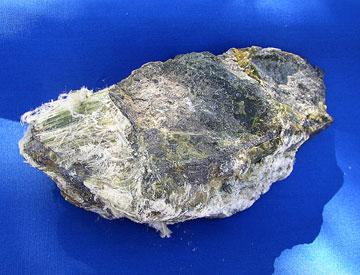
When is Asbestos Dangerous?
When left intact and undisturbed, asbestos containing materials do not pose a health risk to people working or living in buildings. Asbestos containing material is not generally considered to be harmful unless it is releasing dust or fibers into the air where they can be inhaled or ingested. Many of the fibers will become trapped in the mucous membranes of the nose and throat where they can then be removed, but some may pass deep into the lungs, or, if swallowed, into the digestive tract.
Asbestos is hazardous when it is friable. The term "friable" means that the asbestos is easily crumbled by hand, releasing fibers into the air. Sprayed on asbestos insulation is highly friable. Asbestos floor tile is not.
What products make use of these types of asbetos?
These forms of asbestos have limited industrial use but are nevertheless found in certain consumer products, such as talcum powder and vermiculite.
Why did people use asbestos if it was so dangerous?
Asbestos was one of the world’s most valuable resources for thousands of years. Praised for its versatility, strength, and durability, asbestos was used in many products such as lamp wicks, insulation and clothing. Only in the 20th century, as medical technology became more sophisticated, did doctors finally understand the affect it had on the human body. The great tragedy was that millions of people were exposed to thousands of deadly products, and a great deal of damage was already done by the time use was regulated in the 1970s.
What can be done to stop the dangers of asbestos and mesothelioma?
Once the dangers of asbestos became more understood, many responsible government agencies sought to limit or ban the use of asbestos and regulate asbestos exposure. The United States Environmental Protection Agency is responsible for monitoring asbestos levels in workplaces and communities, and has banned the use of asbestos in new products since 1989. Unfortunately, growing industrial nations such as China and India have no regulations regarding this dangerous substance, and continue to use it extensively in products and construction. If you have been exposed to these dangerous minerals in the past, it is important to contact your doctor immediately, for early diagnosis of asbestos-related conditions increases the chances of survival.
There are three less common types of asbestos:
- Fibrous Tremolite
- Fibrous Anthophyllite
- Fibrous Actinolite
As medical technology became more sophisticated, doctors began to finally understand the effects of asbestos on the human body. Asbestos shards are invisible to the naked eye, and their small size and light weight allows them to remain airborne for an extended period after initial release. Furthermore, because asbestos is fibrous by nature, it continues to break into smaller and smaller particles, meaning one asbestos particle can beget hundreds of smaller ones. The size, weight, and composition of asbestos conspire to increase accumulation in the body which contributes to potential exposure to the deadly cancer mesothelioma.
As asbestos particles enter the body, they begin to accumulate in the respiratory and digestive systems. These fibers are so small they often penetrate organs at the microscopic level, protruding through organs into the body cavity. Mesothelioma occurs when asbestos fibers mutate the cells on the lining that surrounds the interior body cavity, called the mesothelium. The mesothelium is a layer of cells that secretes lubrication that allows organs like the heart and lungs to move properly. As these cells mutate and die, lungs cannot take in as much air, and the heart experiences great difficulty beating. Also, since the lungs are responsible for providing air to the blood, cancerous mesothelioma cells can spread all throughout the body through the bloodstream, further complicating an already deadly condition.
Common asbestos related diseases:
- Although mesothelioma is the most common asbestos related disease, asbestosis is another fatal consequence of asbestos exposure. This deadly condition causes the parenchymal tissue within the lungs to become inflamed, which prevents proper air/blood exchange.
- Asbestos induced lung cancer is a fairly rare, yet still dangerous consequence affecting thousands of innocent people across the United States. Victims of lung cancer caused by asbestos have usually been exposed to brown or blue asbestos.
- Asbestosis, lung cancer, and mesothelioma are consequences of prolonged asbestos exposure, as are several benign asbestos related diseases. Regardless, any contact with asbestos merits immediate medical consultation, for treatment options and survival rates are greatly improved with early detection.
Benign Pleural Diseases
Asbestos exposure can cause a wide array of non-cancerous conditions, most of which fall into the benign pleural disease category. These diseases affect the pleura, which is a liquid filled sac between the lungs and the body cavity that enables proper lung movement during breathing. Most people with these conditions exhibit few outward symptoms, and only X-Rays and CAT scans reveal their existence.
There are three main types of benign pleural diseases, each of which is unique.
Even though these diseases are not cancerous, they are nevertheless serious conditions which require prompt medical attention.
1. Pleural plaques
Pleural plaque is the hardening of the pleura, similar to what happens to arteries in arteriosclerosis. When asbestos fibers enter the lungs they cause the pleura to become thick and scaly. Plaques rarely prevent lung function, and scientists still lack a proper explanation for their occurrence.
2. The Pleural fibrosis.
Pleural fibrosis occurs when asbestos particles invade the pleural fluid and thicken it significantly. This is a much graver condition because the thickness of the pleural fluid inhibits lung movement, causing shortness of breath and labored breathing. While not life threatening, pleural fibrosis can increase susceptibility to other lung conditions, such as bronchitis and pneumonia.
3. Pleural diffusion.
This refers to the build-up of pleural fluid in the pleural cavity caused by exposure to asbestos. This fluid must be drained to ensure proper health, but is rarely life threatening. The benign nature of this condition should not lull victims into a false sense of security, for it can often lead to other more serious disabilities.
Asbestos in the Home
Asbestos can be found in many places of the home. It is important to check an old home for asbestos. If you find asbestos in the home - DO NOT move or disturb it. Removal of asbestos in a home should be done by a licensed asbestos removal contractor.
- Asbestos vinyl floor tiles
- Ceiling Tiles
- Fireplace shields
- Doors
- Roof Shingles
Asbestos construction products:
There are a number of asbestos containing construction products because it is a strong and versatile element. Some of the more common asbestos products include:
- Acoustical panels
- Acoustic tiling
- Adhesive
- Asbestos board
- Asbestos cloth
- Asbestos sponge block
- Asbestos-faced mineral wool
- Asbestos textile
- Asbestos tiling
- Asphalt
- Attic insulation
- Bonding cement
- Calcium silicate insulation
- Ceiling Tiles
- Ceramic tiles
- Cork Board
- Cork Coverings
- Flooring backing
- Tiles Wallboard
- Siding and Roofing Friction Materials
- Roofing shingles
- Vinyl floor tiles
- Vinyl wall flooring
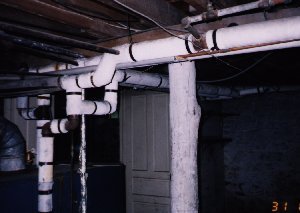
- Insulation – found in and around pipes, air ducts, boilers, thermal paper products, and electrical wiring.
- Spackling
- Patching
- Taping Compounds
- Putty
- Caulk adhesives
- Joint compounds
- Thermal tape
- Fireproofing
- Acoustical Texture Products
- Textured paint and coatings
- Decorative tiling
- Fire blankets
- Curtains
- Doors
|